
Cloud & Infrastructure
Edge Computing Explained: Benefits, Use Cases, and Why It's the Future of Cloud Architecture in 2026
By Riazul Islam•
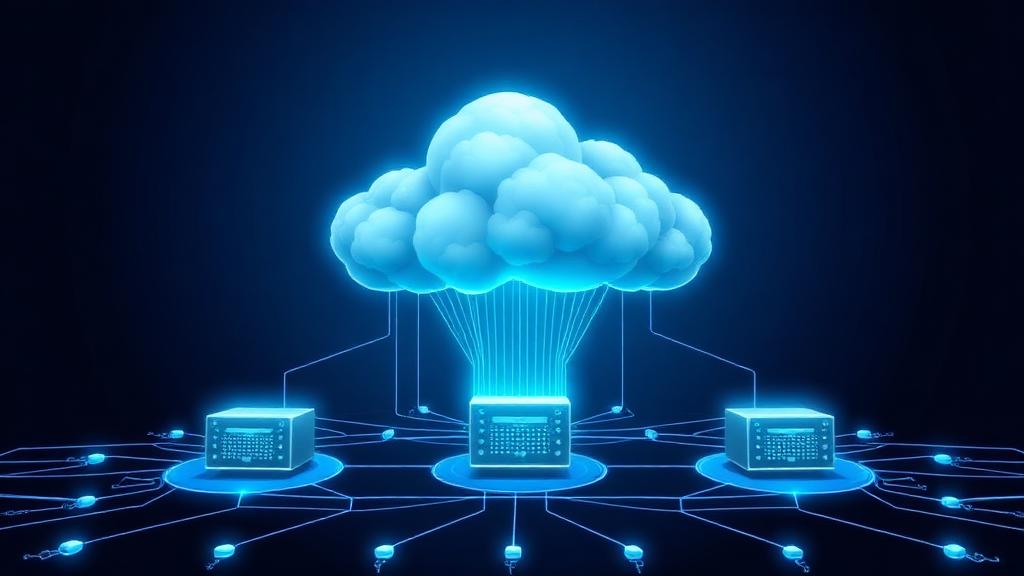
Summary: Learn what edge computing is, how it works, and why it's reshaping cloud architecture. Explore real-world use cases, benefits, and the difference between edge computing vs cloud computing.
## What Is Edge Computing? A Complete Guide for 2026
**Edge computing** is a distributed computing paradigm that brings data processing and storage closer to the sources of data - at the "edge" of the network - rather than relying on a centralized **cloud data center**. This architectural shift dramatically reduces **latency**, improves **performance**, and enables real-time processing for applications that demand instant responses.
In 2026, the **edge computing market** is valued at over **$61 billion** and growing at a CAGR of 37%, driven by IoT adoption, 5G expansion, and AI workloads.
---
## How Does Edge Computing Work?
Traditional cloud computing sends all data to a centralized server for processing. **Edge computing** processes data locally at or near the source:
```
Traditional Cloud:
Device → Internet → Cloud Server → Processing → Response (100-500ms)
Edge Computing:
Device → Edge Node → Local Processing → Response (1-10ms)
```
### Key Components of Edge Computing Architecture
1. **Edge devices** - IoT sensors, cameras, smartphones generating data
2. **Edge nodes/servers** - Local processing units (micro data centers, gateways)
3. **Edge network** - 5G, Wi-Fi 6, or wired connections
4. **Cloud backend** - Central cloud for aggregation, long-term storage, and heavy analytics
---
## Edge Computing vs Cloud Computing: Key Differences
| Feature | Cloud Computing | Edge Computing |
| **Latency** | 50-500ms | 1-10ms |
| **Data Processing** | Centralized | Distributed |
| **Bandwidth Usage** | High | Low (local processing) |
| **Scalability** | Vertical | Horizontal |
| **Reliability** | Internet-dependent | Works offline |
| **Cost** | Pay-per-use (compute) | Higher upfront, lower ongoing |
| **Best For** | Big data analytics | Real-time applications |
---
## Top 10 Benefits of Edge Computing
### 1. Ultra-Low Latency
Edge computing reduces response times from hundreds of milliseconds to **single-digit milliseconds** - critical for autonomous vehicles, industrial automation, and gaming.
### 2. Reduced Bandwidth Costs
By processing data locally, edge computing can reduce **bandwidth costs by 60-80%**. Only relevant, processed data is sent to the cloud.
### 3. Enhanced Data Privacy and Security
Sensitive data stays local and never traverses the public internet, improving **GDPR compliance** and reducing exposure to data breaches.
### 4. Improved Reliability
Edge nodes continue operating even when cloud connectivity is disrupted - essential for **mission-critical applications**.
### 5. Real-Time AI and Machine Learning
Run **inference models locally** for instant predictions without round-trip cloud latency:
- Facial recognition at security checkpoints
- Quality inspection on manufacturing lines
- Predictive maintenance on industrial equipment
### 6. Scalability at the Edge
Add processing power exactly where needed without over-provisioning centralized infrastructure.
### 7. 5G Synergy
**5G networks** and edge computing are complementary technologies - 5G provides the connectivity, edge provides the compute.
### 8. Energy Efficiency
Local processing reduces data transmission energy, contributing to **green computing** goals.
### 9. Support for IoT at Scale
Process data from millions of **IoT devices** without overwhelming central servers.
### 10. Competitive Advantage
Organizations adopting edge computing report **35% faster time-to-insight** and improved customer experiences.
---
## Real-World Edge Computing Use Cases
### Autonomous Vehicles
Self-driving cars generate **4 TB of data per day**. Edge computing processes sensor data in real-time for instant driving decisions - cloud latency would be dangerous.
### Smart Manufacturing (Industry 4.0)
- Real-time quality control using computer vision
- Predictive maintenance reducing downtime by 45%
- Digital twin simulations running at the edge
### Healthcare and Telemedicine
- Wearable health monitors with local AI analysis
- Real-time patient monitoring in hospitals
- Edge-powered medical imaging analysis
### Retail and Smart Stores
- Cashier-less checkout systems
- Real-time inventory tracking
- Personalized in-store experiences using edge AI
### Gaming and AR/VR
- Cloud gaming with **sub-10ms latency**
- AR/VR rendering at the edge for immersive experiences
- Multi-player game state synchronization
---
## Edge Computing Technologies and Platforms
### Leading Edge Computing Platforms in 2026
- **AWS Wavelength** - Embeds AWS compute within 5G networks
- **Azure IoT Edge** - Run cloud workloads on edge devices
- **Google Distributed Cloud Edge** - Managed edge infrastructure
- **Cloudflare Workers** - Serverless compute at 300+ edge locations
- **Fastly Compute** - High-performance edge computing
### Edge-Optimized Frameworks
- **KubeEdge** - Kubernetes-native edge computing
- **OpenYurt** - Extends Kubernetes to edge environments
- **EdgeX Foundry** - Open-source IoT edge platform
- **AWS Greengrass** - Local compute for IoT devices
---
## How to Get Started with Edge Computing
1. **Identify use cases** - Find applications requiring low latency or offline capability
2. **Assess infrastructure** - Evaluate existing network and hardware
3. **Choose a platform** - Select an edge computing platform matching your cloud provider
4. **Start small** - Pilot with a single use case before scaling
5. **Monitor and optimize** - Track edge node performance and resource utilization
---
## The Future of Edge Computing
- **AI at the edge** will become the default for inference workloads
- **Edge-native applications** designed specifically for distributed architectures
- **Sovereign edge** - Government-mandated local data processing
- **Edge-as-a-Service** - Fully managed edge infrastructure
- **Convergence with 6G** - Even faster, more distributed compute
---
## Conclusion: Edge Computing Is Reshaping the Future of Technology
**Edge computing** is not replacing **cloud computing** - it's extending it. By bringing compute closer to data sources, organizations achieve faster processing, lower costs, better privacy, and improved reliability. Whether you're building **IoT solutions**, **real-time AI applications**, or **next-generation web services**, understanding edge computing is essential for modern developers and architects.