
Tech & Innovation
Health Tech and Wearables in 2026: The Predictive Healthcare Revolution
By Riazul Islam•
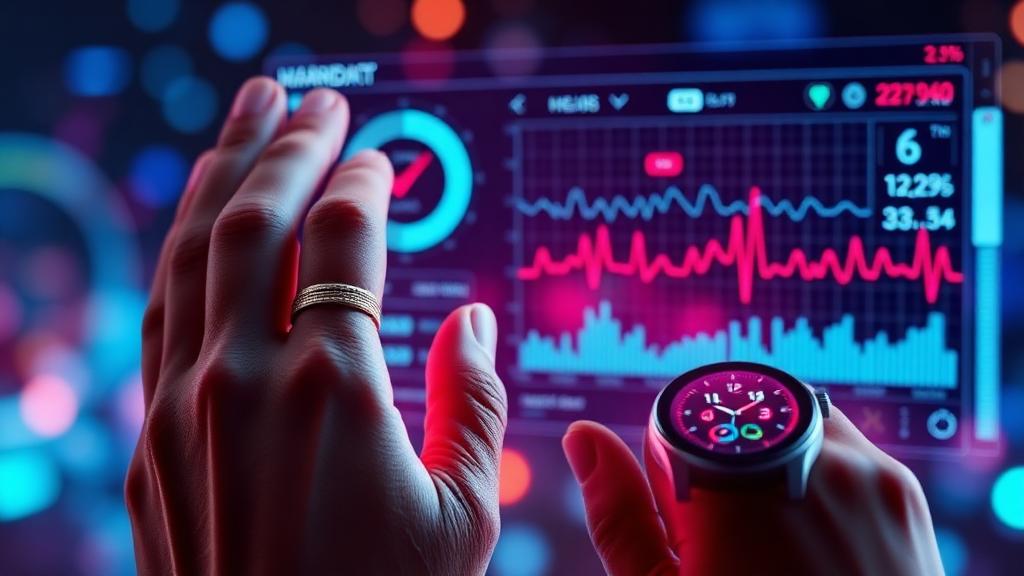
Summary: From smart rings to continuous glucose monitors, health tech wearables are transforming reactive healthcare into predictive wellness. Explore the latest devices, biomarkers, and what they mean for your health.
## From Reactive to Predictive Healthcare
For centuries, healthcare has been **reactive** - you feel sick, you see a doctor. In 2026, wearable technology is enabling a fundamental shift to **predictive healthcare** - devices that detect health issues before you even notice symptoms.
The **global health wearables market** is projected to reach **$186 billion by 2030**, driven by advances in sensor technology, AI, and consumer demand for personalized health data.
---
## The Current State of Health Wearables
### Smart Rings
| Device | Key Features | Price | Battery |
| **Oura Ring Gen 4** | Sleep, HRV, SpO2, temperature, stress | $299+ | 7 days |
| **Samsung Galaxy Ring** | Heart rate, sleep, activity, skin temp | $399 | 7 days |
| **Ultrahuman Ring Air** | Metabolism, movement, sleep, HRV | $349 | 6 days |
| **RingConn** | Blood oxygen, heart rate, sleep | $199 | 7 days |
**Why rings are winning**: They're comfortable 24/7, have no screen distractions, and capture data more accurately than wrist-worn devices (finger arteries are closer to the surface).
### Smartwatches
| Device | Key Features | Price |
| **Apple Watch Ultra 3** | ECG, blood oxygen, crash detection, depth gauge | $799 |
| **Google Pixel Watch 3** | Fitbit sensors, stress management, ECG | $349 |
| **Garmin Fenix 8** | Advanced fitness metrics, solar charging, maps | $899 |
| **Samsung Galaxy Watch 7** | BIA body composition, blood pressure, ECG | $299 |
### Continuous Glucose Monitors (CGMs)
Previously only for diabetics, CGMs are now used by **health-conscious consumers** to understand how food affects their blood sugar:
- **Dexcom Stelo** - First OTC CGM for non-diabetics ($89/month)
- **Abbott Lingo** - 14-day sensor with coaching app
- **Levels** - CGM + AI-powered food response analysis
---
## Key Biomarkers You Can Track in 2026
### Heart Rate Variability (HRV)
**What it measures**: The variation in time between heartbeats
**Why it matters**: Higher HRV indicates better stress resilience, recovery, and cardiovascular fitness
**How to improve**: Sleep, exercise, meditation, [breathwork](https://devriazul.com/biohacking-regular-people-low-cost-wellness-hacks-actually-work)
### Resting Heart Rate (RHR)
**Normal range**: 60-100 bpm (athletes: 40-60 bpm)
**Trend matters most**: A gradually decreasing RHR indicates improving cardiovascular fitness
### Blood Oxygen (SpO2)
**Normal range**: 95-100%
**Why it matters**: Low SpO2 can indicate sleep apnea, respiratory issues, or altitude effects
### Skin Temperature
**Why it matters**: Temperature variations can predict:
- Illness onset (before you feel symptoms)
- Ovulation cycles
- Stress responses
- Recovery status after exercise
### Sleep Architecture
Modern wearables track sleep **stages**:
- **Light sleep**: Body maintenance and memory consolidation
- **Deep sleep**: Physical recovery, immune function, growth hormone release
- **REM sleep**: Emotional processing, creativity, learning
**Optimal distribution**: ~20% deep, ~20% REM, ~60% light
---
## AI-Powered Health Insights
The real power of health wearables isn't raw data - it's **AI interpretation**:
### Predictive Illness Detection
AI algorithms analyze patterns across multiple biomarkers to detect illness **24-48 hours before symptoms**:
- Rising resting heart rate + falling HRV + elevated temperature = likely infection
- Oura Ring's algorithm detected COVID-19 3 days before symptoms in clinical studies
### Personalized Recommendations
AI learns YOUR patterns and provides personalized suggestions:
- "Your HRV is 30% lower than usual. Consider a rest day."
- "Your sleep quality improves when you stop eating 3+ hours before bed."
- "Your stress peaks on Tuesdays - consider rescheduling intense meetings."
### Long-Term Trend Analysis
AI identifies gradual changes that humans miss:
- Slowly increasing resting heart rate over months (cardiovascular warning)
- Declining deep sleep percentage (may indicate sleep apnea)
- Decreasing HRV trend (chronic stress accumulation)
---
## Privacy and Data Concerns
Health data is **the most sensitive personal data** you can generate. Consider:
- **Who owns your data?** Read the privacy policy carefully
- **Where is it stored?** Prefer end-to-end encrypted platforms
- **Can it be sold?** Some companies sell anonymized health data to insurers
- **Can you delete it?** Ensure you have full data portability and deletion rights
For more on protecting your digital privacy, see our [cybersecurity guide](https://devriazul.com/top-10-cybersecurity-threats-and-trends-every-developer-must-know-in-2026).
---
## The Future: What's Coming Next
### Non-Invasive Blood Testing
Wearables that can measure blood glucose, cholesterol, and hydration levels through the skin - without needles.
### Mental Health Monitoring
Devices that track stress, anxiety, and mood through physiological signals, providing early intervention prompts.
### Genetic Integration
Combining wearable data with genetic profiles for truly personalized health optimization.
### Prescription Wearables
FDA-approved wearables that can adjust medication dosages based on real-time biomarker data.
---
## Getting Started: Your First Health Wearable
### Budget Pick: Xiaomi Smart Band 9 ($35)
Basic heart rate, sleep, SpO2, and activity tracking. Perfect for beginners.
### Mid-Range: Oura Ring Gen 4 ($299)
Best-in-class sleep and recovery tracking. Minimal, comfortable, accurate.
### Premium: Apple Watch Ultra 3 ($799)
Most comprehensive feature set including ECG, crash detection, and deep fitness metrics.
---
## Conclusion
Health wearables in 2026 have crossed the threshold from gadgets to **genuine health tools**. They can detect illness before symptoms, optimize your sleep, guide your fitness, and provide insights that were previously only available through expensive medical testing. The key is choosing a device that matches your goals, understanding the data it provides, and using that data to make informed decisions about your health.
The future of healthcare isn't just in hospitals - it's on your finger and wrist.